
The Mind Library
Functional neurological symptom disorder
“The tests are normal, but my legs won’t hold me.”
Real symptoms, a healthy scan, and a nervous system working the wrong way. This is not imagined, and it is treatable.
Shirin has danced Kathak since she was six. Two weeks before her solo at the Shilpakala Academy, her legs gave way on the rehearsal-room stairs. The neurologist ordered an MRI, then blood tests, then a nerve study. Everything was normal. A relative said, kindly, that it must be in her head. She has stopped telling people how frightening it is to stand.
An illustration drawn from common experience. The person is invented; the pattern is not.
Understanding functional neurological symptom disorder
Sometimes the nervous system develops real symptoms without damage to its structure. The problem is in how the brain and body are working, not in their parts; one doctor’s comparison is a computer with healthy hardware and a software fault. The symptoms can affect movement, such as weakness or paralysis of an arm or leg, tremor, jerks or a changed way of walking; the senses, such as numbness or loss of vision; speech or swallowing; or come as attacks that look like epileptic seizures or faints, in which a person may fall, shake or stop responding, called functional or dissociative seizures.
Older textbooks called this conversion disorder. The American DSM-5-TR names it functional neurological symptom disorder. The World Health Organization’s ICD-11 records it as dissociative neurological symptom disorder and places it among the dissociative disorders. The two classifications use different labels and group the condition differently, so neither name should be read as the other’s. Many neurologists simply say functional neurological disorder, or FND.
Stress and past difficulties can play a part, but not always, and the symptoms are never faked. People who have them are not imagining them, and the diagnosis is made by a doctor after a proper neurological and psychiatric assessment.
Signs and symptoms of functional neurological symptom disorder
- Weakness, heaviness or paralysis of a limb, or a change in walking, with normal tests
- Shaking, jerking or other movements that are hard to control
- Attacks that look like seizures or faints
- Numbness, or loss of vision, speech or swallowing
- Symptoms that vary with attention or distraction
- Repeated investigations without an answer
Treatment for functional neurological symptom disorder
Treatment begins with a clear, believable diagnosis, made by recognising positive signs of a functional problem, not just by ruling everything else out. It usually combines explanation, rehabilitation such as physiotherapy, and psychological therapy, with doctors from different specialties working together. As a psychiatrist, Dr. Tajreen works alongside neurologists rather than instead of them.
What getting better can look like
Shirin’s turning point may simply be being believed. From there, standing becomes a skill to retrain, one step at a time, and then a step to music.
Common questions about functional neurological symptom disorder
Is functional neurological symptom disorder the same as faking it?
No. The symptoms of functional neurological symptom disorder, such as weakness, shaking, seizure-like attacks or loss of sensation, are real and are never faked. The problem is in how the brain and body are working, not in damage to their structure. Stress and past difficulties can play a part, but not always.
How can functional neurological symptom disorder be diagnosed if all my tests are normal?
Functional neurological symptom disorder is diagnosed by recognising positive signs of a functional problem, such as Hoover’s sign, where a weak leg moves normally when attention is drawn elsewhere, not only by ruling everything else out. Normal tests are part of the picture, not the whole of it. Any new weakness, numbness or seizure should always be assessed medically first.
When to see a psychiatrist
If you have real symptoms and normal tests, you deserve an explanation and a plan. Any new weakness, numbness or seizure must always be assessed medically first.
Care here is personal: built around your history, your health and what you want to change, and reviewed with you as it goes.
If you or someone else is in immediate danger, call 999 or go to the nearest hospital emergency department.
If some of this sounds familiar, a first conversation is a good place to start. You could open with the sentence at the top of this page.
Dr. Tajreen is consulting in Gulshan now, until 1:00 pm. Call +880 1310-519046Every address and its hours
Sources
- Perez et al., Journal of Neuropsychiatry and Clinical Neurosciences, 2021 (PMID 32778007)
- American Psychiatric Association, DSM-5-TR, functional neurological symptom disorder, 2022
- World Health Organization, ICD-11, dissociative neurological symptom disorder
Last updated
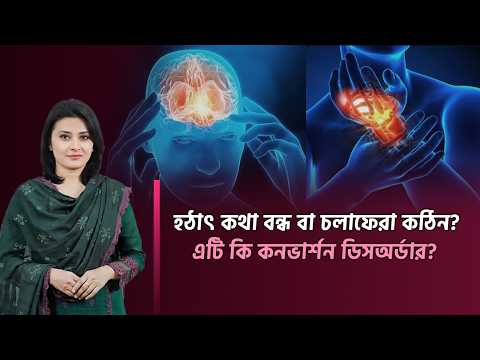
Watch Dr. Tajreen explain
You do not need to have everything figured out before you begin.
Book an appointment