N° 01
Depression
“I’m just tired.”
Rest has stopped restoring you. Depression does not always look like sadness.
ReadPsychiatry & Psychotherapy · Dhaka
Psychiatry and psychotherapy with Dr. Tanjima Tajreen. Careful, unhurried and discreet, at a private chamber in Gulshan, at The HUB, Gulshan-1, and at AMZ Hospital, Uttar Badda.
The premise
You can be doing everything expected of you, and still feel that something is not right. This work begins there, with careful listening, a thorough medical assessment and psychotherapy grounded in evidence.
Understanding yourself
Studies of the sentences people offer long before they can name what is happening. Starting points for reading, never a diagnosis.
01 / 07
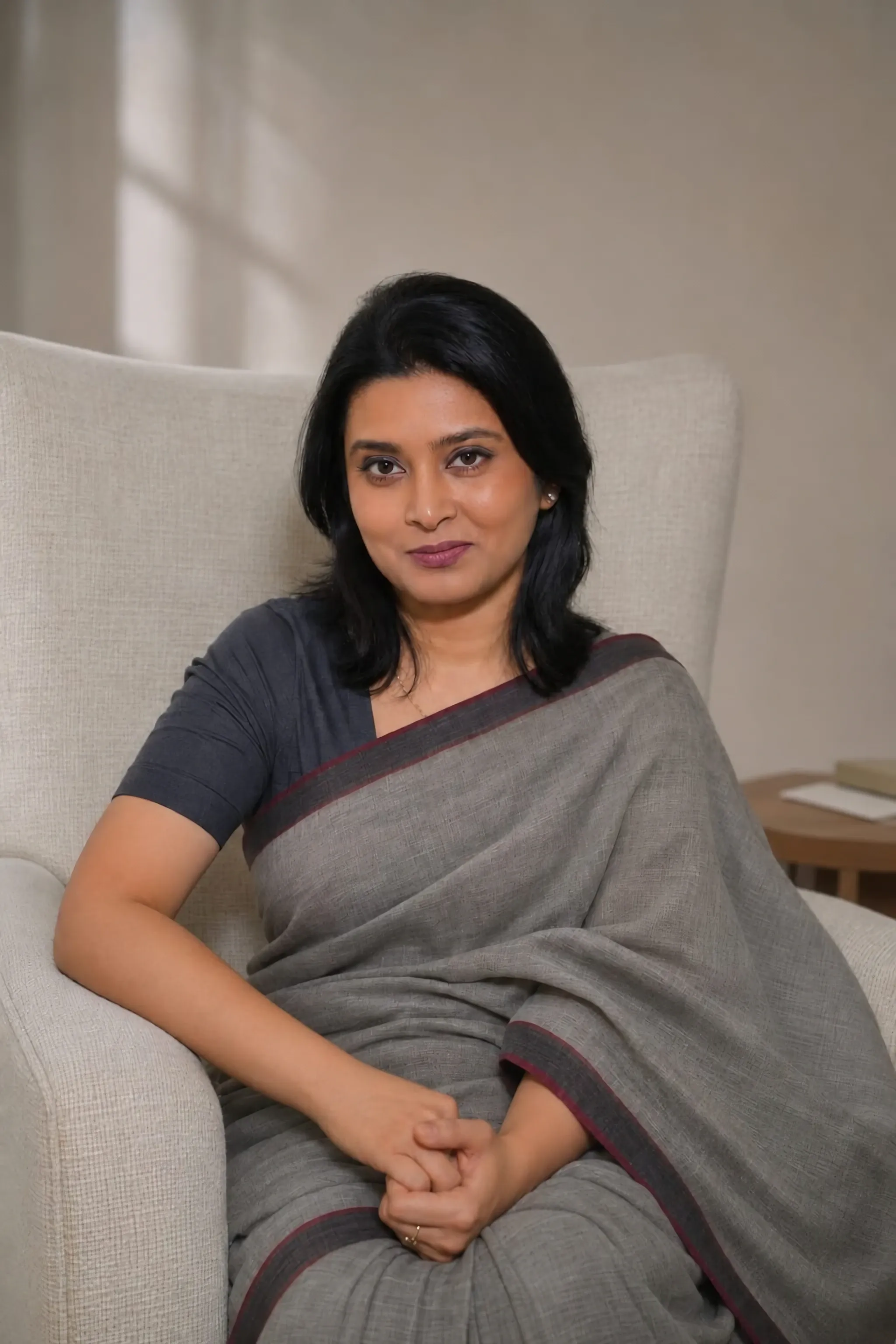
Dr. Tajreen
Psychiatrist & Psychotherapist
She brings medical assessment and talking therapy into the same room. Dr. Tajreen qualified in medicine at Sir Salimullah Medical College, Dhaka, and is a Member of the Royal College of Psychiatrists in the United Kingdom.
She sees adults, children, adolescents and older people, offering psychiatric care alongside counselling and psychotherapy that draws on cognitive, behavioural and trauma-focused approaches.
The facts, set out plainly.
Psychiatry
A medical assessment of your mental health. Where it helps, a diagnosis, and a considered conversation about medication.
Psychotherapy
Structured, evidence-based talking therapy, drawing on cognitive, behavioural and trauma-focused approaches, for individuals, couples and families.
Many people need something of both. The first consultation is where that becomes clear.
Every assessment is individual. Not everyone needs every step, or in this order.
What has been happening, in your own words, and what matters most to you.
Symptoms, history and circumstances, explored with care, including anything medical.
Evidence-based options, explained plainly. You decide together where to begin.
Progress revisited at follow-up, and the plan adjusted when it should be.
Questions people ask
Questions people often bring to a first appointment, answered plainly.
No. The first consultation is for understanding what is happening. Medicine is one option among several, and for many people talking therapy comes first. If a medicine might help, it is explained, your questions are answered, and the decision is made together. You can take time to think.
There is no threshold. If your sleep, mood, worry or relationships have not felt right for a while, that is reason enough. Many people come with everyday difficulties, and it is easier to help early.
What you say in consultation is confidential. Nobody, including family or an employer, is told without your consent. The rare exception is when someone’s life is in immediate danger, and even then it is discussed with you wherever possible.
Many people do, and it is welcome here. You do not need to arrive with the right words or a neat story. Finding the words is part of the work, and the conversation goes at your pace.
For many conditions, no. Medicines are often taken for a set period, reviewed regularly, and then reduced gradually with your doctor. Some conditions need longer treatment, as in the rest of medicine, and that is always discussed openly.
Antidepressants do not cause craving or the need for ever higher doses. Stopping them suddenly can cause unpleasant symptoms, which is why they are reduced in stages with a doctor. Some sleeping tablets can cause dependence, so they are used only for short periods.
You talk, and you are listened to. There are questions about what has been happening, your health, your sleep and your circumstances. You leave with a clearer picture and the options in front of you. Nothing is decided without you.
Before you begin
You do not need to have everything figured out before you begin.
Appointments
Appointments are made by telephone. Call the address that suits you, or copy the number and call later.
Private Chamber · Niketon
Next consulting hours tomorrow, 10:00 am to 1:00 pm
House #60, Road #8, Block #C, Niketon, Gulshan-1, Dhaka 1212AMZ Hospital Ltd.
Consulting now, until 8:00 pm
Cha-80/3, Shadhinota Sarani, Pronati Sarani Road, Uttar Badda, Dhaka-1212Neuroscience & Psychiatry Hub · Gulshan-1
Next consulting hours Tuesday, 10:00 am to 1:00 pm
House 12, Road 25/30, Gulshan-1, Dhaka 1212Arrange a consultation
Message the Private Chamber on WhatsApp to ask about appointment availability. A short message is enough.
Open WhatsAppFor appointments only. Please don’t share medical details here. In an emergency, call 999.