Understanding yourself
Night shifts and sleep
“I work New York hours from Mirpur.”
Night work pulls sleep against the body clock. How shift work affects mood and sleep, and what can help when the day is your night.
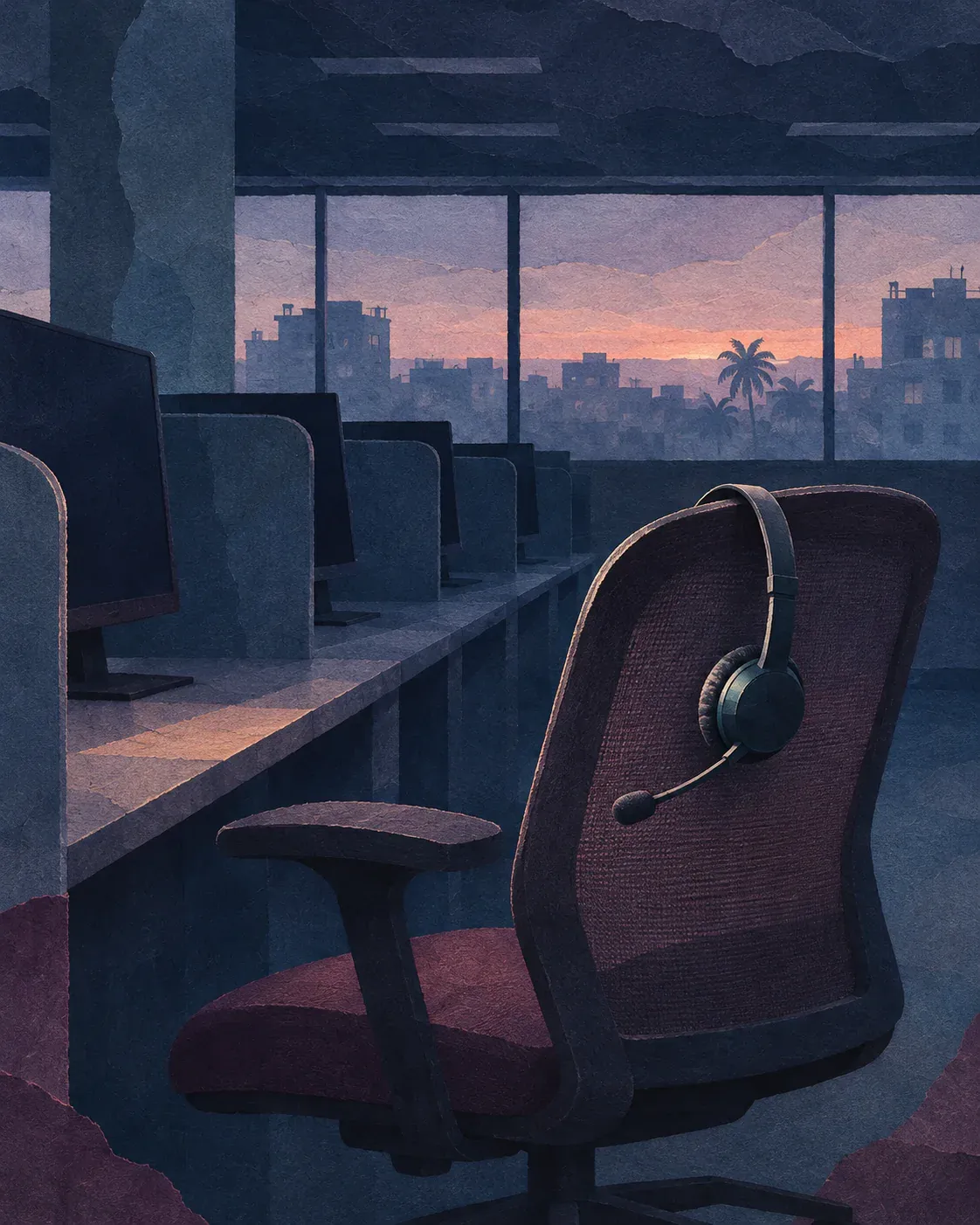
At a quarter to five on a December morning, Mirpur 10 roundabout is lost in fog, and Arafat, 25, is the first customer at the tea stall. For eight hours he has been “Aaron” to customers of an American internet company. The tea stall mama already knows his order. “Aaron sir, ginger cha, no sugar,” he says, and laughs at his own joke.
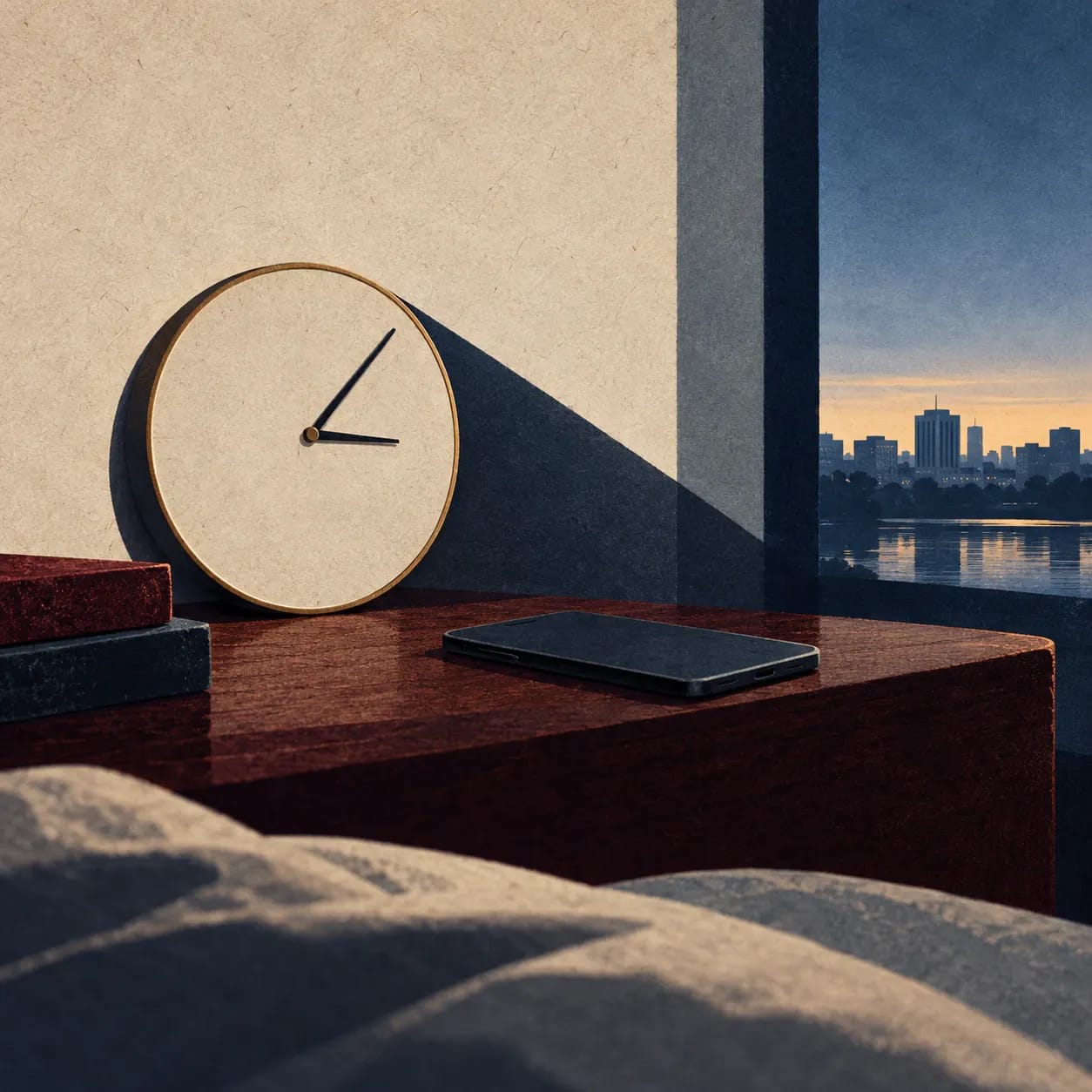
At home the day does not let him sleep. Ammu’s pressure cooker whistles at eight, the building next door starts drilling at ten, and his phone fills with the family group. At his cousin’s holud he dozes off in the family photograph. His Phupu tells everyone, “Ei chele raate jage, dine ghumay, a real pecha.” Arafat tells his friend, “I work New York hours from Mirpur.” He now gets about four hours of sleep, eats paratha at three in the morning, drinks energy drinks to stay sharp, and has started snapping at his mother.
An illustration drawn from common experience. The person is invented; the pattern is not.
Understanding night shifts
The body clock is set by light and expects sleep at night. Night work asks the body to sleep when the clock says wake, so daytime sleep is often short and broken, and alertness at work dips in the early hours. When insomnia or excessive sleepiness is persistent, clearly tied to a work schedule and causing distress, it may be a circadian rhythm sleep-wake disorder, shift work type, often called shift work disorder. Long-term sleep loss also affects mood, concentration, appetite and patience, and it can feed into depression.
How common it is
In a meta-analysis of seven long-term studies with 28,431 participants, shift work was associated with a higher risk of poor mental health overall and of depressive symptoms in particular, with the clearest effect in women. Among nurses, a 2025 meta-analysis of 24 studies and 15,479 nurses estimated that 45.5% had shift work disorder, with higher rates in Asia and Africa; those figures come from nurses, not call centre workers. We did not find a peer-reviewed figure for call centre workers in Bangladesh.
Signs worth noticing
- Daytime sleep of only a few hours, however tired you are
- Fighting sleep at work, or on the ride home
- Low mood, irritability or tearfulness that is new
- Relying on energy drinks to stay awake, or tablets to sleep
- Weight change or stomach problems
- Missing family life and feeling cut off from friends
How care helps
A psychiatrist starts with a sleep diary of two weeks, then looks for other causes of poor sleep and tiredness: sleep apnoea, depression, anxiety, caffeine and alcohol, and physical problems such as anaemia or thyroid disease, which a blood test can check. If depression is present, it is treated in its own right. The rest is planning: a fixed sleep window protected by the family, a dark, quiet room, caffeine kept to the first half of the shift, and similar hours on days off where possible. The research on specific fixes is weak: a Cochrane review of 17 trials of bright light, napping and other measures found the results inconclusive and the evidence mostly low or very low quality. Sleeping tablets are not a long-term answer and need a doctor’s care if used at all.
What getting better can look like
What helps Arafat might be blackout curtains, the phone on silent from nine to four, a note in the family group that says “Arafat sleeping, call after 4”, lunch cooked after he wakes, and the last energy drink at one in the morning, not four.
Common questions about night shifts
Can night shifts cause depression?
Shift work is associated with a higher risk of depressive symptoms. A 2019 meta-analysis of seven long-term studies found a raised risk, especially in women. This does not mean every shift worker becomes depressed, and depression that develops is treatable.
How can I sleep during the day after a night shift?
Keep the same sleep window as often as you can, make the room as dark and quiet as possible, and ask family to protect those hours. Avoid caffeine in the last part of the shift and heavy meals just before sleep. If you still cannot sleep, or are struggling to stay awake at work or on the road, talk to a doctor.
When to see a psychiatrist
If poor sleep has lasted more than a few weeks, if you are nodding off at work or while travelling, or if your mood has dropped, an assessment can help. If you have thoughts of ending your life, call 999.
Care here is personal: built around your history, your health and what you want to change, and reviewed with you as it goes.
If some of this sounds familiar, a first conversation is a good place to start. You do not need the right words, or to be certain.
Dr. Tajreen is consulting in Uttar Badda now, until 8:00 pm. Call +880 1847-331010Every address and its hours
Sources
- Torquati et al., American Journal of Public Health, 2019 (PMID 31536404)
- Zhao et al., International Journal of Nursing Studies, 2025 (PMID 41223687)
- Slanger et al., Cochrane Database of Systematic Reviews, 2016 (PMID 27549931)
You do not need to have everything figured out before you begin.