
Understanding yourself
Obsessive compulsive disorder
“I know it is locked. I check it anyway.”
The thought arrives uninvited and will not leave until the ritual is done. Then it comes back.
Sadia’s fashion house in Banani is famous for its finish; every hem is perfect. At home it costs her an hour each night. She checks the door lock seven times, not six, because six feels wrong. She knows it is locked; she watched her own hand turn the key. Then the thought arrives anyway, that something will happen to her mother if she does not check properly, and she is back at the door.
An illustration drawn from common experience. The person is invented; the pattern is not.
Understanding obsessive compulsive disorder
Obsessive compulsive disorder has two parts. Obsessions are unwanted thoughts, images or urges that keep intruding and cause great distress, such as fears of contamination, harm, or things not being exactly right. Compulsions are the actions or mental rituals people feel driven to perform to quiet them: washing, checking, counting, praying in a set way, seeking reassurance. The relief never lasts, so the ritual grows.
OCD is not tidiness, and it is not a quirk. Many people with OCD know their fears are excessive, which is part of what makes it so exhausting.
How common is obsessive compulsive disorder?
About 2.3% of adults in the United States meet the criteria for OCD at some point in life, according to the US National Comorbidity Survey Replication, a study of American adults. It often begins in childhood or adolescence.
Signs and symptoms of obsessive compulsive disorder
- Unwanted thoughts that return again and again and cause real distress
- Rituals that take more than an hour a day, or must be done “just right”
- Asking family for repeated reassurance
- Avoiding places or objects that trigger the thoughts
Treatment for obsessive compulsive disorder
The best-tested psychological treatment is a form of cognitive behavioural therapy called exposure and response prevention: facing the trigger in small, planned steps without performing the ritual, until the brain learns the alarm was false. Certain antidepressant medicines also reduce symptoms, and the two are sometimes combined.
What getting better can look like
Getting better, for Sadia, might mean turning the key once and walking to the lift with the thought still there, and noticing, three floors down, that it has gone quieter on its own. The perfect hems are still perfect.
Common questions about obsessive compulsive disorder
Is OCD just being very clean or tidy?
No. OCD is not tidiness, and it is not a quirk. It involves unwanted thoughts, images or urges that keep intruding and cause great distress, and rituals such as washing, checking, counting or seeking reassurance that people feel driven to perform to quiet them. Many people with OCD know their fears are excessive, which is part of what makes it so exhausting.
What is the best treatment for OCD?
The best-tested psychological treatment is exposure and response prevention, a form of cognitive behavioural therapy in which a person faces the trigger in small, planned steps without performing the ritual. Certain antidepressant medicines also reduce symptoms, and NICE guidance offers both as treatment options, combined for severe OCD.
When to see a psychiatrist
If rituals are taking up hours of your day, or your family has been drawn into them, it is worth a consultation, and starting early helps.
Care here is personal: built around your history, your health and what you want to change, and reviewed with you as it goes.
If you or someone else is in immediate danger, call 999 or go to the nearest hospital emergency department.
If some of this sounds familiar, a first conversation is a good place to start. You do not need the right words, or to be certain.
Dr. Tajreen is consulting in Uttar Badda now, until 8:00 pm. Call +880 1847-331010Every address and its hours
Sources
- Ruscio et al., Molecular Psychiatry, 2010 (PMID 18725912; NCS-R)
- NICE guideline CG31, Obsessive-compulsive disorder and body dysmorphic disorder, 2005
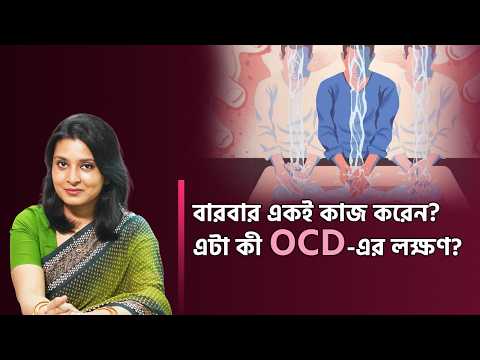
Watch Dr. Tajreen explain
You do not need to have everything figured out before you begin.