Understanding yourself
Performance anxiety in sport
“In the nets I hit everything. In a match, I freeze.”
Some athletes play freely in practice and freeze when it counts. What competitive anxiety is, how common mental health symptoms are in sport, and what helps.
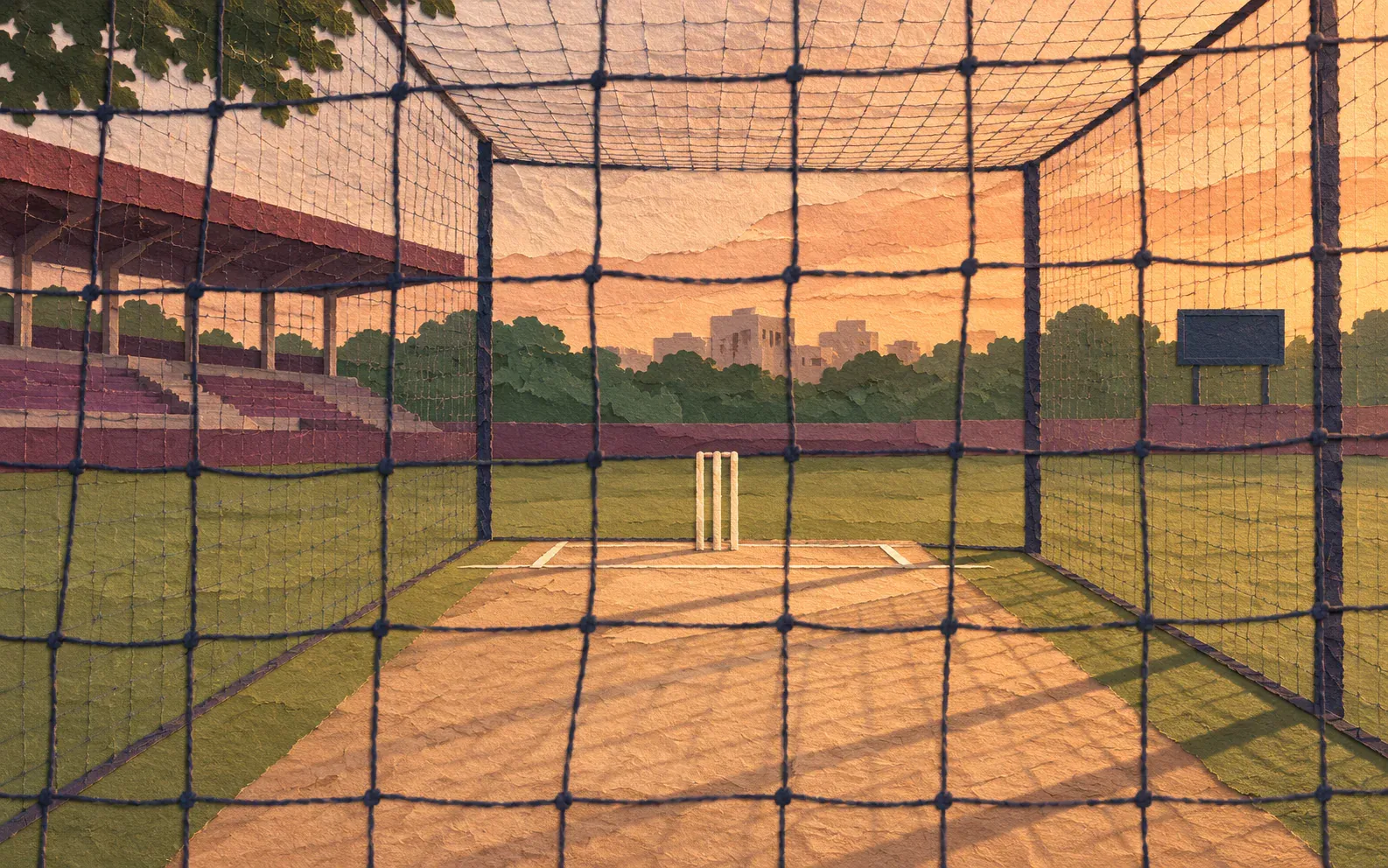
In the nets at the Mirpur academy, Shuvo Ahmed, 22, is unstoppable. The bowling machine sends it down at 135 kph and he drives it back past the coach’s ear. His teammates call him “nets-er Bradman”, and the man at the canteen has started bringing his tea without asking.
Match day is another person. At his first Dhaka league game of the season his father is in the stand with a flask of cha and three uncles from the neighbourhood. Shuvo walks out, takes guard, and his hands go heavy, his legs feel far away and the bowler seems twice as close. He is out for three, poking at a ball he would have hit for four in the nets. That night the Facebook comments are worse than the score. His coach takes him aside. “Shuvo, tor problem ta batting na, matha.” Shuvo stares at his pads. “In the nets I hit everything. In a match, I freeze.”
An illustration drawn from common experience. The person is invented; the pattern is not.
Understanding performance anxiety in sport
Competitive or performance anxiety is the fear and tension that come with being evaluated in sport. It has a mental side, worry about failing, letting people down or being judged, and a physical side, a racing heart, tight muscles, shaking and nausea. Some arousal before a match is normal and can help. It becomes a problem when it regularly disrupts performance or well-being. A psychiatrist will also ask whether it is part of a wider anxiety disorder, such as social anxiety or panic disorder, or whether depression, sleep problems or substance use are involved.
How common it is
In a meta-analysis of studies of current elite athletes, involving between 2,895 and 5,555 athletes depending on the symptom, the prevalence of mental health symptoms and disorders ranged from 19% for alcohol misuse to 34% for anxiety or depression. These figures cover mental health symptoms in general, not competitive anxiety alone. The International Olympic Committee’s 2019 consensus statement notes that mental health symptoms are common in elite athletes, can impair performance, and can raise the risk of injury and slow recovery. We did not find a peer-reviewed figure for cricketers in Bangladesh.
Signs worth noticing
- Performing well in practice but much worse under match pressure
- Physical symptoms before play: shaking, nausea, a pounding heart
- Replaying mistakes and reading online comments for hours
- Sleeping badly before matches
- Losing enjoyment of the sport, or thinking of quitting
- Using alcohol, pills or supplements to cope
How care helps
A psychiatrist assesses for an anxiety disorder, depression and sleep problems, and asks about supplements, energy drinks and other substances that can worsen a racing heart. For competitive anxiety, a 2026 network meta-analysis of 46 randomised trials with 2,049 athletes found that psychological approaches were associated with less competitive anxiety; mindfulness and acceptance-based training had the largest estimated effect, and relaxation, imagery and biofeedback showed promising estimates in some groups, though the authors stress that uncertainty remains substantial. The IOC consensus advises that care should address both the individual athlete and the environment they train and compete in, which includes coaches, selectors and the pressure of public comment.
What getting better can look like
Shuvo might begin with a pre-ball routine he does in the nets and in matches, noticing the heaviness in his hands and letting it be there, a twenty-seven in a practice game, his phone off after matches, and his father bringing jhalmuri regardless of the score.
Common questions about performance anxiety in sport
Why do I play well in practice but badly in matches?
In matches, pressure and the fear of being judged raise anxiety, which tightens the body and crowds the mind. Skills that run freely in practice can then feel stiff or out of reach. This is common. Psychological training, particularly mindfulness and acceptance-based approaches, has some evidence for reducing competitive anxiety, though the research is still uncertain.
Can a psychiatrist help with sports performance anxiety?
Yes. A psychiatrist can check whether the anxiety is part of an anxiety disorder, depression or a sleep problem, and treat it, often working alongside a sport psychologist or coach. Mental health symptoms are common in elite athletes, and the IOC consensus statement says care should address both the athlete and the environment around them.
When to see a psychiatrist
If anxiety is spoiling your game for a whole season, or spreading into sleep, mood and life off the field, an assessment can help. If you are having thoughts of ending your life, call 999.
Care here is personal: built around your history, your health and what you want to change, and reviewed with you as it goes.
If some of this sounds familiar, a first conversation is a good place to start. You do not need the right words, or to be certain.
Dr. Tajreen is consulting in Uttar Badda now, until 8:00 pm. Call +880 1847-331010Every address and its hours
Sources
- Gouttebarge et al., British Journal of Sports Medicine, 2019 (PMID 31097451)
- Reardon et al., British Journal of Sports Medicine, 2019 (PMID 31097450)
- Li et al., Sports Medicine Open, 2026 (PMID 41866642)
You do not need to have everything figured out before you begin.