Understanding yourself
Unemployment and mental health
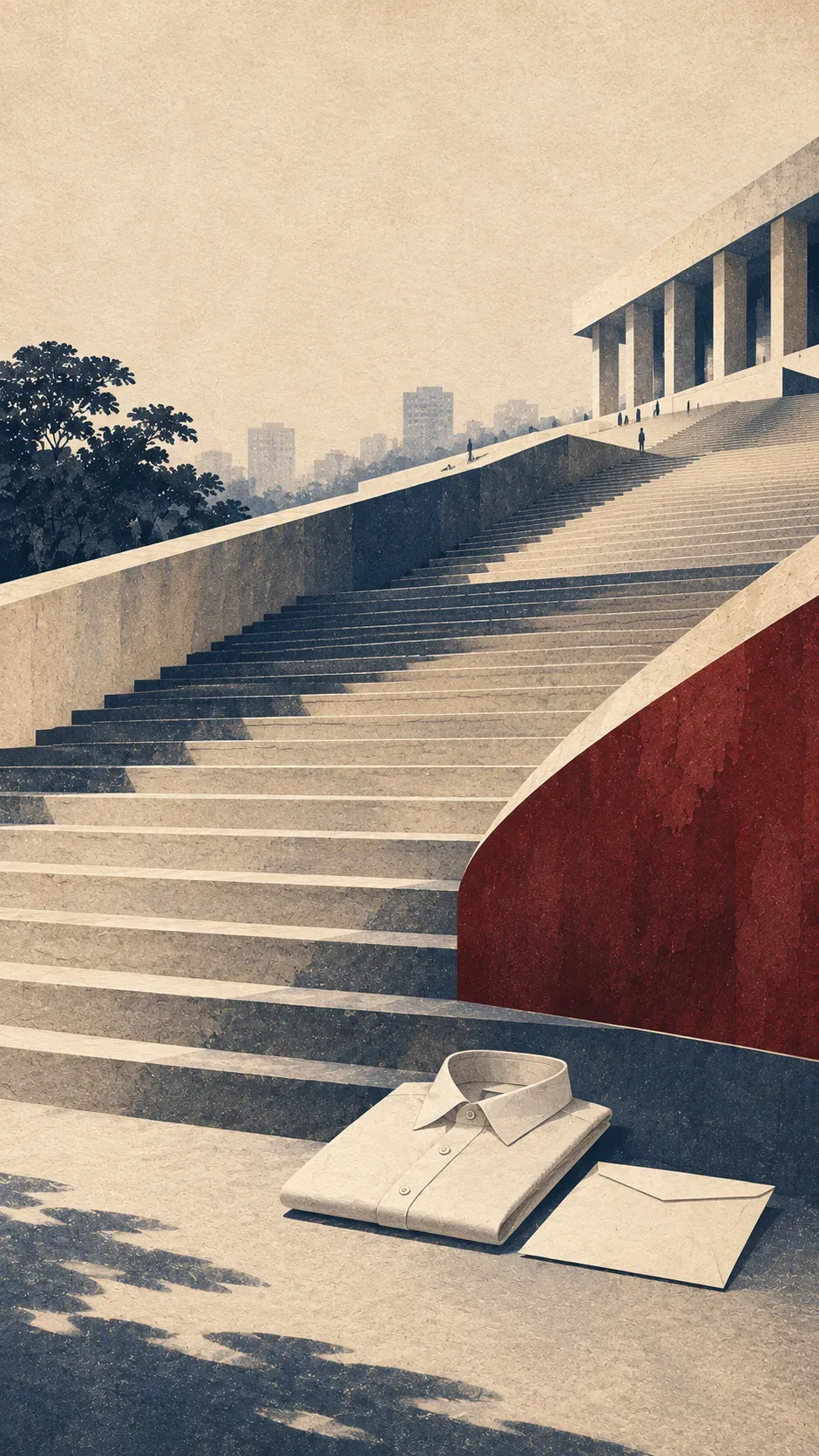
“Masters done. Third BCS. Still no job.”
Years of job-seeking and exam cycles can wear down sleep, mood and hope. Unemployment is not an illness, but the depression it brings can be treated.
At seven in the morning the queue outside the Central Public Library at Shahbagh is already long, and Rakib, 28, is in it with his guide books, a bottle of water and a packet of biscuits. His friends call the queue “the BCS mess”. They joke that the library guard knows their results before they do.
At Eid-ul-Adha he goes home to Bogura. At the gorur haat his Chachi finds him between two cows. “Rakib, chakri ta ki holo? Our Shimul joined a bank in March.” His cousin, four years younger, pays for the cha. Rakib stops opening the family WhatsApp group. Back in Dhaka he sleeps until noon on some days and studies fourteen hours on others. On the phone to his mother he says, “Ammu, ei bar hobe.” To his friend Jewel he says, flatly, “Masters done. Third BCS. Still no job.”
An illustration drawn from common experience. The person is invented; the pattern is not.
Understanding unemployment
Unemployment is not a mental illness, but long job-seeking is a recognised social risk to mental health. It takes away routine, income, standing in the family and a sense of purpose, and it adds rejection and comparison. In Bangladesh, the long, uncertain cycle of competitive government exams can stretch this over years. Some people develop a depressive disorder or an anxiety disorder; others feel hopeless and stuck without meeting the criteria for either. WHO notes that unemployment, job and financial insecurity, and recent job loss are risk factors for suicide attempts.
How common it is
In a nationwide household survey of 7,270 Bangladeshi adults, in which psychiatrists made diagnoses using DSM-5 criteria, unemployed adults had nearly three times the odds of a depressive disorder (adjusted odds ratio 2.87). Only 4.1% of those with depression had sought professional help. In a 2026 survey of 689 job-seeking graduates in Bangladesh, recruited by convenience and screened by questionnaire rather than diagnosed, 48.5% screened positive for depression and 39.3% for anxiety. Internationally, a meta-analysis of 38 long-term studies found that symptoms of depression, anxiety and distress were higher during unemployment and fell after re-employment, though the authors rated the certainty of the evidence as low.
Signs worth noticing
- Sleeping much later, or much less, than before
- Long hours at the desk with little going in, or not opening the books at all
- Avoiding dawats, Eid at home, or the family group chat
- Feeling worthless, or like a burden to your parents
- Losing interest in friends, cricket or food
- Thoughts that life is not worth living
How care helps
A psychiatrist looks at whether low mood has become a depressive disorder, checks for anxiety, sleep problems and substance use, and asks directly and kindly about thoughts of suicide. For depression, talking therapies such as CBT and behavioural activation, which rebuilds a daily structure step by step, are commonly used; medication may be considered when depression is moderate or severe. Care can also be practical: a study timetable with real rest in it, a second career path alongside the exams, and words for the conversation with parents.
What getting better can look like
Rakib’s new routine might be library hours from nine to five, cricket on Friday mornings, two private-sector applications alongside the next BCS, and the next time Chachi asks, a smile and “Insha’Allah, hobe”, before he asks about her knees.
Common questions about unemployment
Can being unemployed cause depression?
Long-term studies suggest that unemployment raises symptoms of depression and anxiety and that finding work again tends to lower them, although the certainty of this evidence is low. In Bangladesh, a national survey found unemployed adults had nearly three times the odds of a depressive disorder. Not everyone who is unemployed becomes depressed, and depression that does develop is treatable.
How do I cope with failing the BCS or other competitive exams again?
Disappointment after a result is normal and often eases over days or weeks. Keeping a routine, sleeping at regular times, staying in touch with friends and having a back-up plan can help. If low mood, hopelessness or loss of interest lasts more than two weeks, or you have thoughts of suicide, it is worth seeing a doctor.
When to see a psychiatrist
If the waiting has turned into weeks of low mood, broken sleep or withdrawal from people, an assessment can help. If you are having thoughts of ending your life, call 999 or go to the nearest emergency department now.
Care here is personal: built around your history, your health and what you want to change, and reviewed with you as it goes.
If some of this sounds familiar, a first conversation is a good place to start. You do not need the right words, or to be certain.
Dr. Tajreen is consulting in Uttar Badda now, until 8:00 pm. Call +880 1847-331010Every address and its hours
Sources
- Sarkar et al., Journal of Affective Disorders, 2026 (PMID 41672149)
- Alam et al., Public Health Challenges, 2026 (PMID 42255344)
- Sterud et al., Occupational and Environmental Medicine, 2025 (PMID 40930969)
- WHO, Mental health at work, fact sheet, 15 September 2026
You do not need to have everything figured out before you begin.