Understanding yourself
Children and divorce
“Weekdays at Ammu’s, Fridays at Abbu’s.”
Children whose parents separate are at somewhat higher risk of depression and anxiety. Keeping them out of the conflict between parents helps.
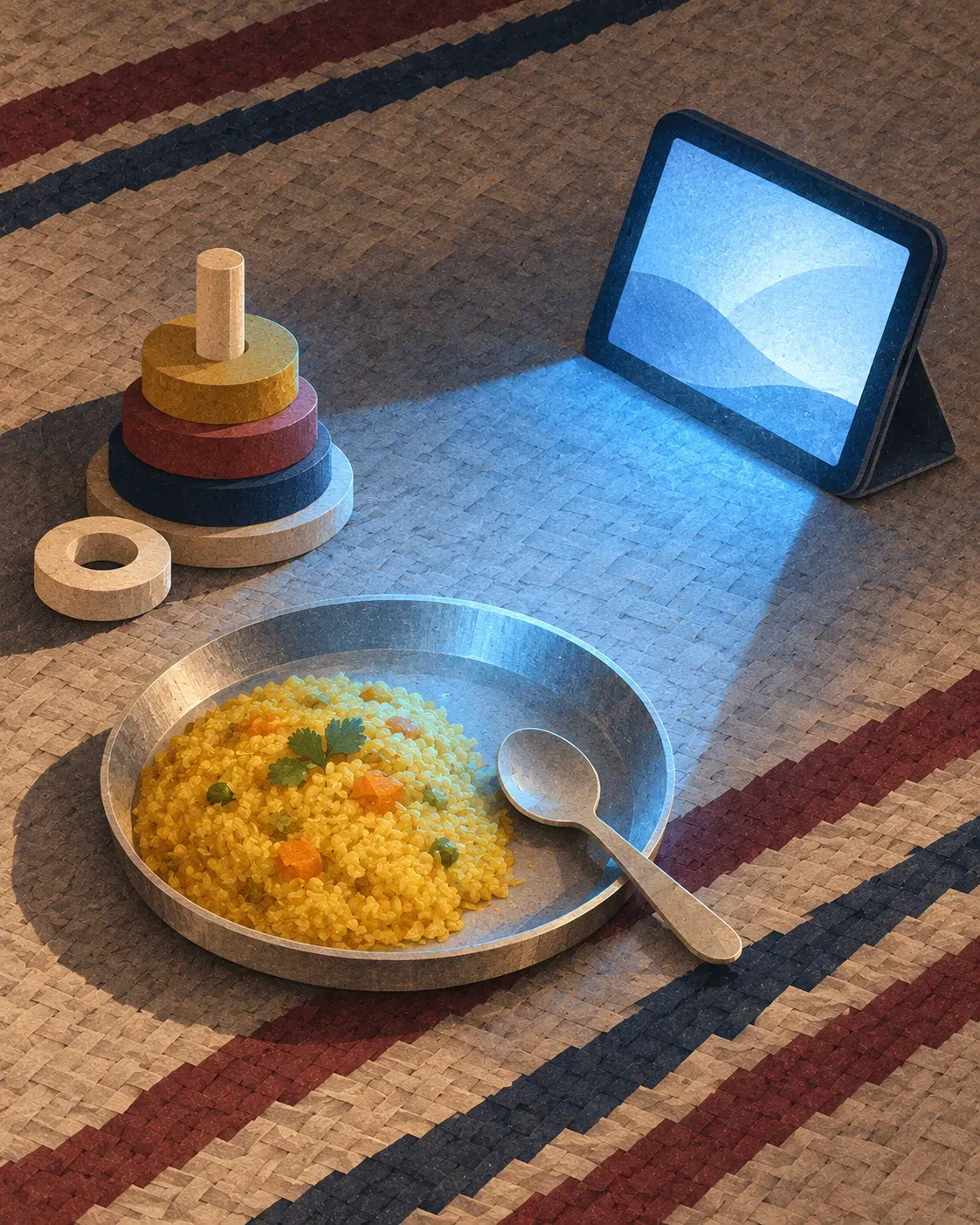
Friday, eleven o’clock, the car park of a Dhanmondi shopping mall. Ahnaf, 10, stands between two cars with his cricket bat and his school bag, which goes wherever he goes. His mother Fahmida hands over his inhaler and his homework. His father checks the time. Neither of them looks at the other.
In the back seat, Ahnaf runs his usual negotiation. “Abbu, Ammu said I could have Pepsi on Fridays. Also I need two birthday cakes this year. One for each house. It’s only fair.” His father laughs for the first time that day.
But his teacher has called twice. He has stopped going to cricket practice, gets stomach aches on Thursday nights, and last week told his Nanu that if he had been better at school, Abbu would not have left. Fahmida heard it from the next room and sat on the bathroom floor for a long time.
An illustration drawn from common experience. The people are invented; the pattern is not.
Understanding children and divorce
Children do not need their parents to stay together to be well. What often hurts them is living in the middle of conflict: hearing arguments, carrying messages, feeling they must choose, or believing they caused the separation. Their distress often shows in the body and in behaviour before it shows in words: stomach aches, sleep problems, anger, clinginess, falling grades. Most children settle with time and steady care. Some develop an anxiety disorder or depression, and these deserve treatment in their own right.
How common it is
In a meta-analysis of 54 studies with more than 500,000 participants, people whose parents had divorced had higher odds of later depression (odds ratio 1.29), anxiety, suicidal thoughts, and alcohol, smoking and drug use. The effects were modest, and the effect on distress was smaller in more recent studies. Because the increase in risk is modest, most children of divorce do not develop these problems. The studies come largely from outside Bangladesh.
Signs worth noticing
- Stomach aches or headaches around handovers or school
- Blaming themselves for the separation
- Withdrawal from friends, sport or play
- Anger, tearfulness or clinginess that does not ease
- Being used, or offering themselves, as a messenger between parents
How care helps
A child psychiatric assessment looks at the child, not only the divorce: anxiety, mood, sleep, learning and any bullying, and checks physical causes for symptoms such as stomach pain. Children often benefit from a few sessions of their own, where they can say what they cannot say at home. Parents benefit too. In a US trial, the New Beginnings Program, a group parenting course for divorced mothers of 9 to 12-year-olds, was followed 15 years later by fewer internalising disorders, such as anxiety and depression, in the young adults (15.5% against 34.6% in the comparison group). A version for fathers, which teaches skills to keep children out of parental conflict, reduced children’s internalising problems at 10 months.
What getting better can look like
Ahnaf’s better days might be two parents who agree on one rule about Pepsi, a handover where they say hello, a coach who knows what is happening at home, and a night when he says, without being asked, that it was not his fault.
Common questions about children and divorce
How does divorce affect children’s mental health?
Children whose parents separate are at somewhat higher risk of later depression and anxiety, but most do well. Ongoing conflict between parents, and children being caught in the middle, add to the strain. Warm, consistent parenting from both homes helps.
Should my child see a psychiatrist after our divorce?
Not every child needs one. It is worth seeking an assessment if sadness, fear, anger, stomach aches or school problems last for weeks, or if your child blames themselves or talks about not wanting to live.
When to see a psychiatrist
If your child’s distress is lasting, affecting school or sleep, or worrying you, an assessment can help the whole family. If a child talks about harming themselves, seek help the same day, or call 999.
Care here is personal: built around your history, your health and what you want to change, and reviewed with you as it goes.
If some of this sounds familiar, a first conversation is a good place to start. You do not need the right words, or to be certain.
Dr. Tajreen is consulting in Uttar Badda now, until 8:00 pm. Call +880 1847-331010Every address and its hours
Sources
- Auersperg et al., Journal of Psychiatric Research, 2019 (PMID 31622869)
- Wolchik et al., Journal of Consulting and Clinical Psychology, 2013 (PMID 23750466)
- Sandler et al., Prevention Science, 2018 (PMID 28913663)
You do not need to have everything figured out before you begin.