Understanding yourself
The first year of marriage
“We’d met four times before the wedding.”
The first year joins two people and two families. Arguments are normal; learning to repair them is a skill that can be taught.
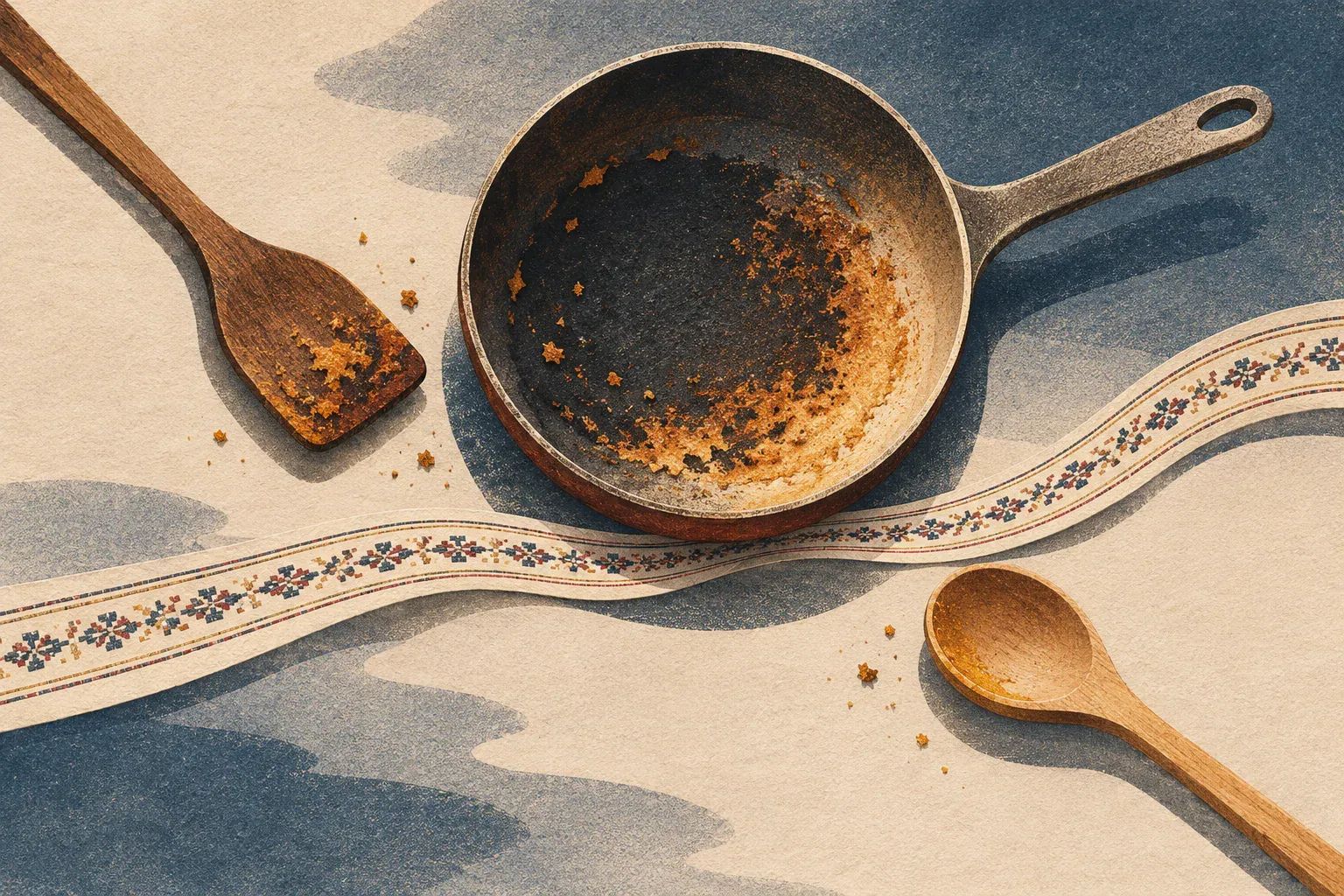
The first proper rain of the monsoon, and Antara decides to make khichuri and beef bhuna for her in-laws, the way her own Ammu does. The khichuri is perfect. The beef, unfortunately, has met the bottom of the pan. Shuvo’s mother tastes it, says “Very good, very smoky,” and the family WhatsApp group in Mirpur DOHS receives a photo with the caption “Bou-ma’s first bhuna.” Shuvo’s cousin replies with a fire emoji.
Antara and Shuvo had met four times before the wedding: once with both families, twice for coffee, and once at a jewellery shop that did not count. Seven months in, they are learning things no biodata mentioned. He leaves wet towels on the bed. She needs an hour of quiet after work. He tells his mother everything. She tells him nothing until it explodes.
Last week they argued about Eid, which family first, and both said things they did not mean. She went to her parents’ for two nights. Her Nanu, unbothered, told her about the time Nanu herself refused to speak to Nana for an entire Ramadan. “And look, fifty-two years.”
An illustration drawn from common experience. The people are invented; the pattern is not.
Understanding the first year of marriage
The first year of any marriage, arranged or not, is a period of adjustment: to another person’s habits, to a new household, often to in-laws, and to the gap between hopes and daily life. Conflict is expected and is not a sign that the marriage is failing. What matters more is how a couple argues and how they repair. When the strain does not ease, it can show as persistent anxiety, low mood, poor sleep or withdrawal in one or both partners, and occasionally as an adjustment disorder or depression.
How common it is
This research measures the link between marriage and health, not how often first-year strain occurs. Relationship quality and health are linked. A meta-analysis of 126 studies covering more than 72,000 people found that better marital quality went with better physical health, including lower risk of death; the effects were small, similar in size to those of health habits such as diet, and the studies cannot prove cause and effect.
Signs worth noticing
- The same argument returning every week, never settled
- One partner going silent for days, or leaving the house to cope
- Anxiety, low mood or poor sleep since the wedding
- Feeling unable to raise anything without a family member taking sides
- Any shoving, threats or fear at home
How care helps
There is no need to wait for a crisis. Marriage and relationship education, which teaches couples to listen, speak without blame and solve problems together, has been studied in more than 140 evaluations; a meta-analysis found modest evidence that it improves couples’ communication. Another analysis found that programmes of moderate length, 9 to 20 hours, worked better than very short ones. Couples therapy is an option when patterns are already stuck. A psychiatrist also checks each partner for depression, anxiety or other conditions that make conflict harder, and treats them where present.
What getting better can look like
Antara and Shuvo might start with an agreed Eid plan, alternating years, decided before either mother asks, a rule that a fight pauses at eleven at night and resumes over cha the next morning, and a second, unburnt bhuna, with no photo in the group.
Common questions about the first year of marriage
Is it normal to fight a lot in the first year of marriage?
Yes, disagreement is common in the first year, as two people and often two families adjust to each other. Frequent arguments are not in themselves a bad sign. What helps is learning to calm down, listen and repair after a fight.
Does premarital or couples counselling actually work?
Relationship education programmes have been found to improve couples’ communication modestly, and longer programmes tend to work better than very short ones. Couples therapy can help when the same conflicts keep returning.
When to see a psychiatrist
If arguments are constant, if either of you feels persistently anxious or low, or if you are thinking of separating, a consultation can help. If anyone at home is being hurt or threatened, seek help immediately, and call 999 if you are in danger.
Care here is personal: built around your history, your health and what you want to change, and reviewed with you as it goes.
If some of this sounds familiar, a first conversation is a good place to start. You do not need the right words, or to be certain.
Dr. Tajreen is consulting in Uttar Badda now, until 8:00 pm. Call +880 1847-331010Every address and its hours
Sources
- Robles et al., Psychological Bulletin, 2014 (PMID 23527470)
- Blanchard et al., Journal of Family Psychology, 2009 (PMID 19364214)
- Hawkins et al., Behavior Therapy, 2012 (PMID 22304880)
You do not need to have everything figured out before you begin.