Understanding yourself
Workplace bullying and office politics
“My boss takes the credit. The team laughs at his jokes.”
When credit is taken, mistakes are mocked and the dread starts on Saturday night, bullying at work can wear down mental health.
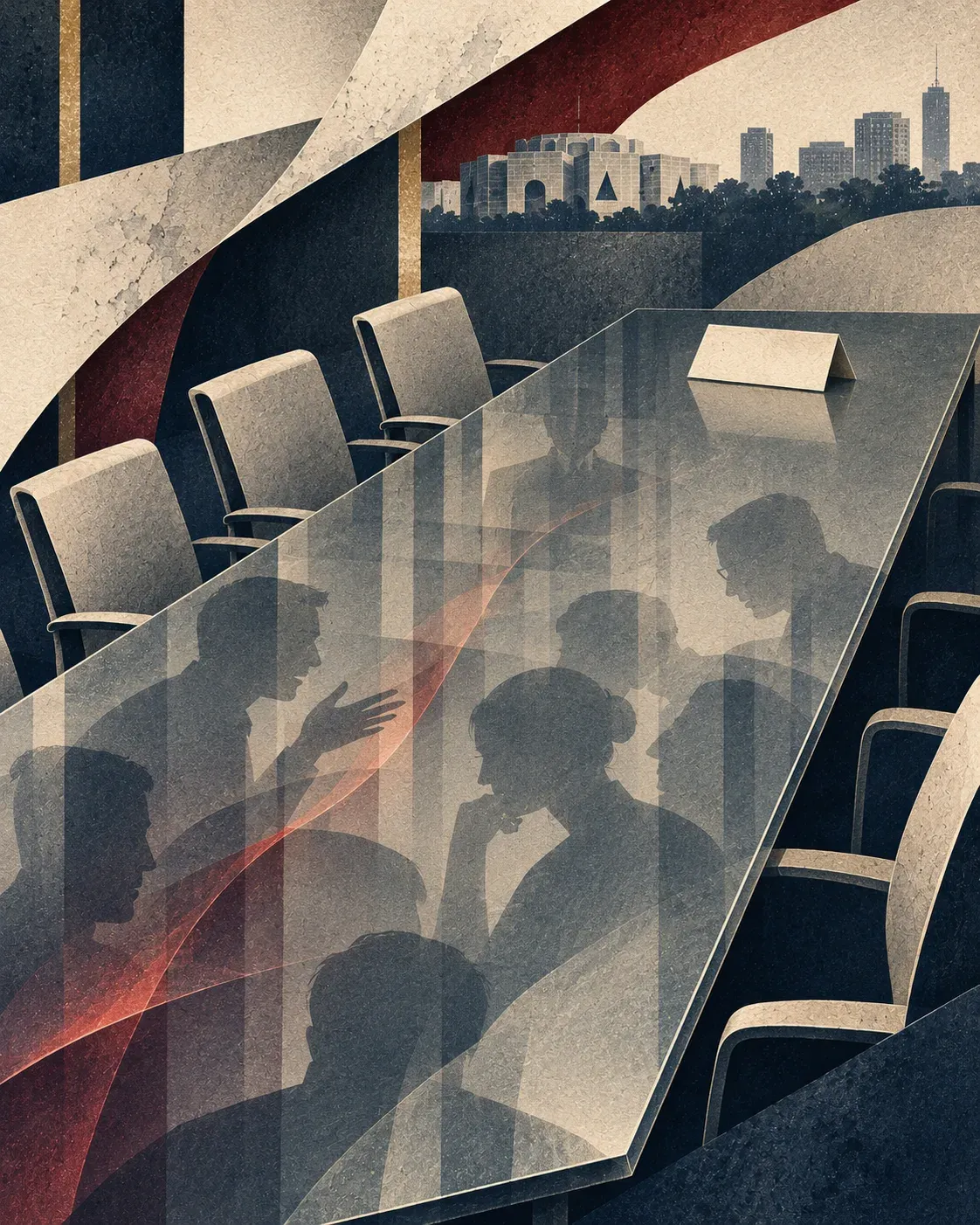
The office picnic bus is crawling out of Tejgaon towards a resort in Gazipur, and Shahed bhai, the boss, has the microphone. “Our churn dashboard,” he tells the regional head on speakerphone, “I built it over one weekend.” Tonmoy, 30, who built it over three weekends, looks out at the brick kilns. The juniors laugh at the next joke a little too loudly.
At the resort his friend Pavel pours him cha from a flask and does a perfect impression of the boss: “Tonmoy, eta ki? Cholbe na. Redo.” Tonmoy laughs for the first time that day. At home that night Ammu puts a plate of bhapa pitha in front of him and asks why he has stopped talking about work. “Nothing, Ammu.” He has said that every evening since August. On Saturday nights, before the working week starts, he wakes at four with his heart racing.
An illustration drawn from common experience. The person is invented; the pattern is not.
Understanding workplace bullying
Workplace bullying is repeated, persistent negative treatment at work, usually by someone the person finds hard to stand up to: credit taken, work criticised in front of others, being left out of meetings and emails, ridicule passed off as jokes, impossible deadlines. It is not a diagnosis. It is a stressor, and a well-studied one. Over months it can lead to anxiety, low mood and poor sleep, and in some people to an adjustment disorder, an anxiety disorder or a depressive disorder, which are diagnoses and can be treated.
WHO lists violence, harassment or bullying, and authoritarian supervision, among the risks to mental health at work.
How common it is
In a meta-analysis that pooled 65 effect sizes from more than 115,000 workers, workplace bullying was linked with symptoms of depression, anxiety and stress-related complaints. In long-term studies of more than 54,000 people, bullying predicted later mental health complaints, and the link ran both ways: people who already had mental health problems were also more likely to be bullied later. All the data were self-reported.
Signs worth noticing
- Dreading the start of the working week, with poor sleep the night before
- Replaying meetings and conversations at home, long after work
- Headaches, stomach upsets or a racing heart before the office
- Losing confidence in work you used to do well
- Pulling away from colleagues, family or things you enjoy
How care helps
A psychiatrist first looks at what the stress has done: whether there is an anxiety disorder, depression or an adjustment disorder, how sleep has changed, whether alcohol or sleeping tablets have crept in, and whether symptoms such as palpitations need a physical check. Treatment then follows what is found, often cognitive behavioural therapy (CBT), and medication where a depressive or anxiety disorder is moderate or severe.
Therapy also has practical work: keeping a dated record of incidents, rehearsing what to say in meetings, deciding whether and how to go to HR, and weighing options calmly rather than in panic. Evidence on preventing bullying is thin: a Cochrane review found only five studies and rated the evidence that workplace programmes reduce it as very low quality. WHO recommends that employers tackle these risks at the level of the organisation, for example with frameworks for dealing with violence and harassment.
What getting better can look like
Tonmoy might get back an ordinary Saturday night’s sleep, a folder of dated emails that shows his work is his, and one calm sentence in Sunday’s meeting: “Happy to walk everyone through the dashboard I built.”
Common questions about workplace bullying
Can workplace bullying cause depression?
Workplace bullying is consistently linked with depression, anxiety and stress symptoms. In a 2015 meta-analysis, bullying predicted later mental health complaints in long-term studies, and people with existing problems were also more likely to be bullied. Bullying is a stressor rather than an illness, but the anxiety or depression that can follow it is treatable.
Is office politics the same as bullying?
Not always. Disagreement, competition and a demanding manager are part of many jobs. Behaviour starts to look like bullying when it is repeated and persistent, aimed at someone who finds it hard to defend themselves, and includes humiliation, taking credit, exclusion or mockery. Writing down what happens, with dates, often makes the pattern clearer.
When to see a psychiatrist
If dread of work has been affecting your sleep, health or home life for more than a few weeks, an assessment can help you sort out what is stress and what may need treatment. If you are having thoughts of ending your life, call 999 or go to the nearest emergency department.
Care here is personal: built around your history, your health and what you want to change, and reviewed with you as it goes.
If some of this sounds familiar, a first conversation is a good place to start. You do not need the right words, or to be certain.
Dr. Tajreen is consulting in Uttar Badda now, until 8:00 pm. Call +880 1847-331010Every address and its hours
Sources
- Verkuil et al., PLoS One, 2015 (PMID 26305785)
- Gillen et al., Cochrane Database of Systematic Reviews, 2017 (PMID 28134445)
- WHO, Mental health at work, fact sheet, 15 September 2026
You do not need to have everything figured out before you begin.