The Mind Library
Digital media addiction
“My phone is the first and last thing I see.”
When screens crowd out sleep, study, work and people. Only gaming disorder is a formal diagnosis, but the harm can be real.
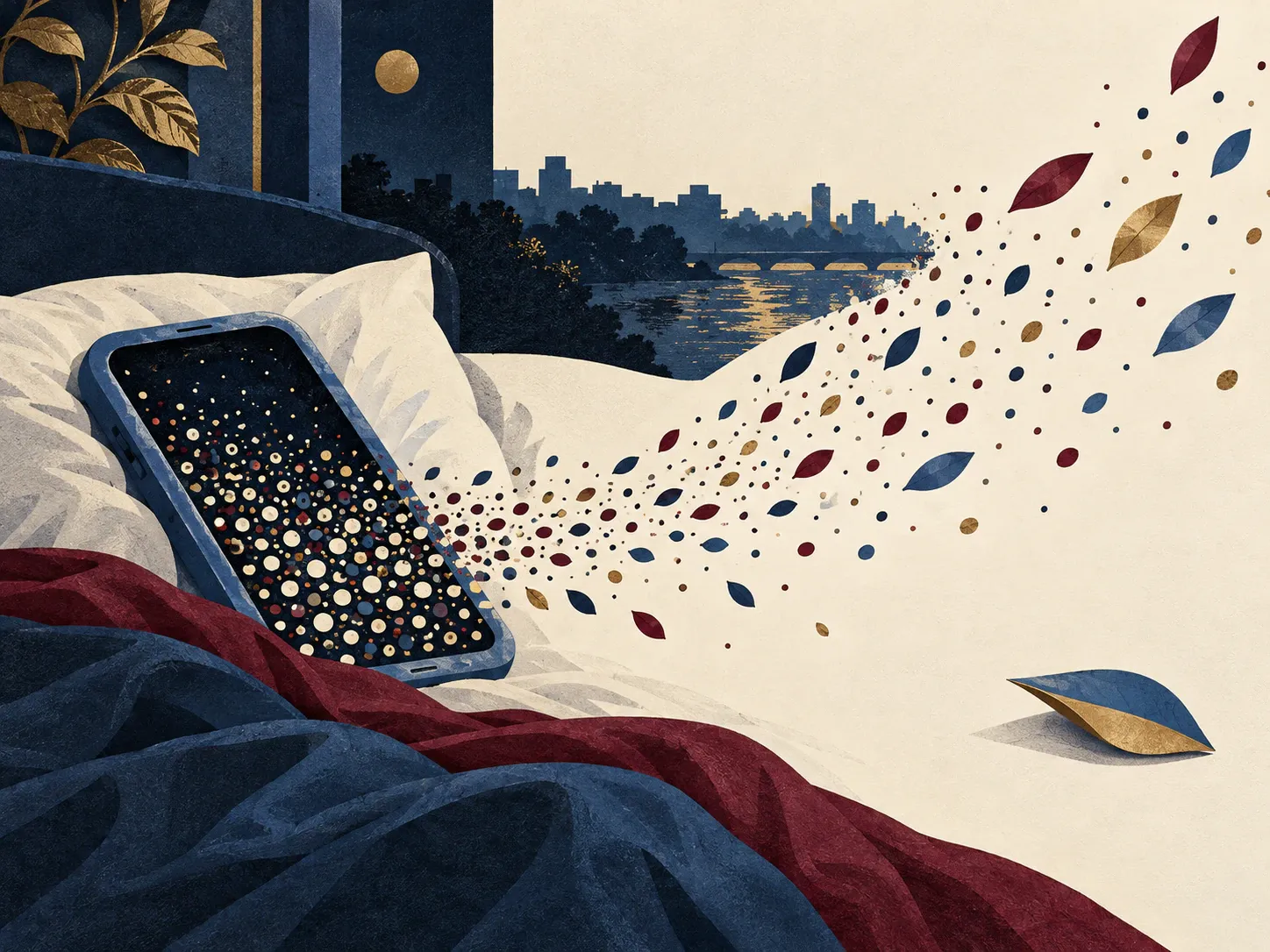
Tanha, 22, is in her final year of English at a university in Dhanmondi, and she cannot remember the last book she finished. Her screen-time report says nine hours a day: reels, then a Korean drama, then reels again, then a game on her phone while the drama plays. She falls asleep after three with the phone on her face and misses her morning class. When she tries to leave it in another room, she feels restless within minutes and goes to fetch it. Her mother says the phone has eaten her daughter.
An illustration drawn from common experience. The person is invented; the pattern is not.
Understanding digital media addiction
Digital media addiction is a broad, everyday phrase for losing control over time spent on screens: social media, short videos, streaming, online games, shopping, pornography or news. Using a lot of digital media is not, by itself, a disorder. What matters is loss of control, giving screens priority over other activities and interests, and carrying on despite clear harm to sleep, study, work, health or relationships, over a long period.
Of all these, only gaming disorder is a formal diagnosis, in the World Health Organization’s ICD-11, alongside gambling disorder. The others are studied by researchers as possible behavioural addictions but are not established diagnoses. Heavy use often travels with depression, anxiety, ADHD, loneliness or stress, and sometimes the screen is how a person escapes them, which is why an assessment looks underneath. This library has separate entries on gaming and phone overuse, smartphone overuse in adults, social media, news anxiety and doomscrolling, and screens and young children.
Signs worth noticing
- Using screens far longer than intended, and failing to cut down
- Late nights online, then tiredness and missed classes or work
- Restlessness or irritability when the phone or game is out of reach
- Giving up hobbies, friends, exercise or family time for screens
- Hiding how much time is spent, or arguments about it at home
- Using screens to escape low mood, anxiety or loneliness
How care helps
An assessment looks at the pattern of use and at what may lie underneath, such as depression, anxiety, ADHD or loneliness, which are treated in their own right. Cognitive behavioural therapy has the most evidence for behavioural addictions: it helps people notice their triggers, set limits they can keep, and fill the time with other things. For young people, family involvement helps, and simple changes, such as phones out of the bedroom at night, support the plan. No medicine is approved for digital media addiction itself.
What getting better can look like
For Tanha, it might be a phone that charges in the drawing room overnight, one novel finished in Poush, and the first morning class she has made in a month.
Common questions about digital media addiction
Is digital media addiction a real diagnosis?
Only one part of it is. Gaming disorder is a diagnosis in the World Health Organization’s ICD-11. Problematic use of social media, short videos, streaming or shopping is studied as a possible behavioural addiction but is not an established diagnosis. What matters clinically is loss of control and real harm, not the number of hours alone.
How can I cut down my screen time?
Small, concrete changes help: the phone out of the bedroom at night, notifications off, settings that limit use, and planned time for people and activities offline. If you cannot cut down despite trying, or low mood or anxiety are part of the picture, an assessment can help.
When to see a psychiatrist
If screens are costing you sleep, study, work or relationships, and you cannot cut down despite trying, it is worth a consultation. Parents can come first on their own.
Care here is personal: built around your history, your health and what you want to change, and reviewed with you as it goes.
If you or someone else is in immediate danger, call 999 or go to the nearest hospital emergency department.
If some of this sounds familiar, a first conversation is a good place to start. You could open with the sentence at the top of this page.
Dr. Tajreen is consulting in Gulshan now, until 1:00 pm. Call +880 1310-519046Every address and its hours
Sources
- Brand et al., American Journal of Psychiatry, 2025 (PMID 39659159)
- World Health Organization, ICD-11, gaming disorder
Last updated
You do not need to have everything figured out before you begin.
Book an appointment