Understanding yourself
Family conflict after a parent's death
“Abba’s flat. Four siblings. Nobody speaks now.”
A parent’s death can split siblings over property and old wounds. The grief underneath often needs as much attention as the dispute.
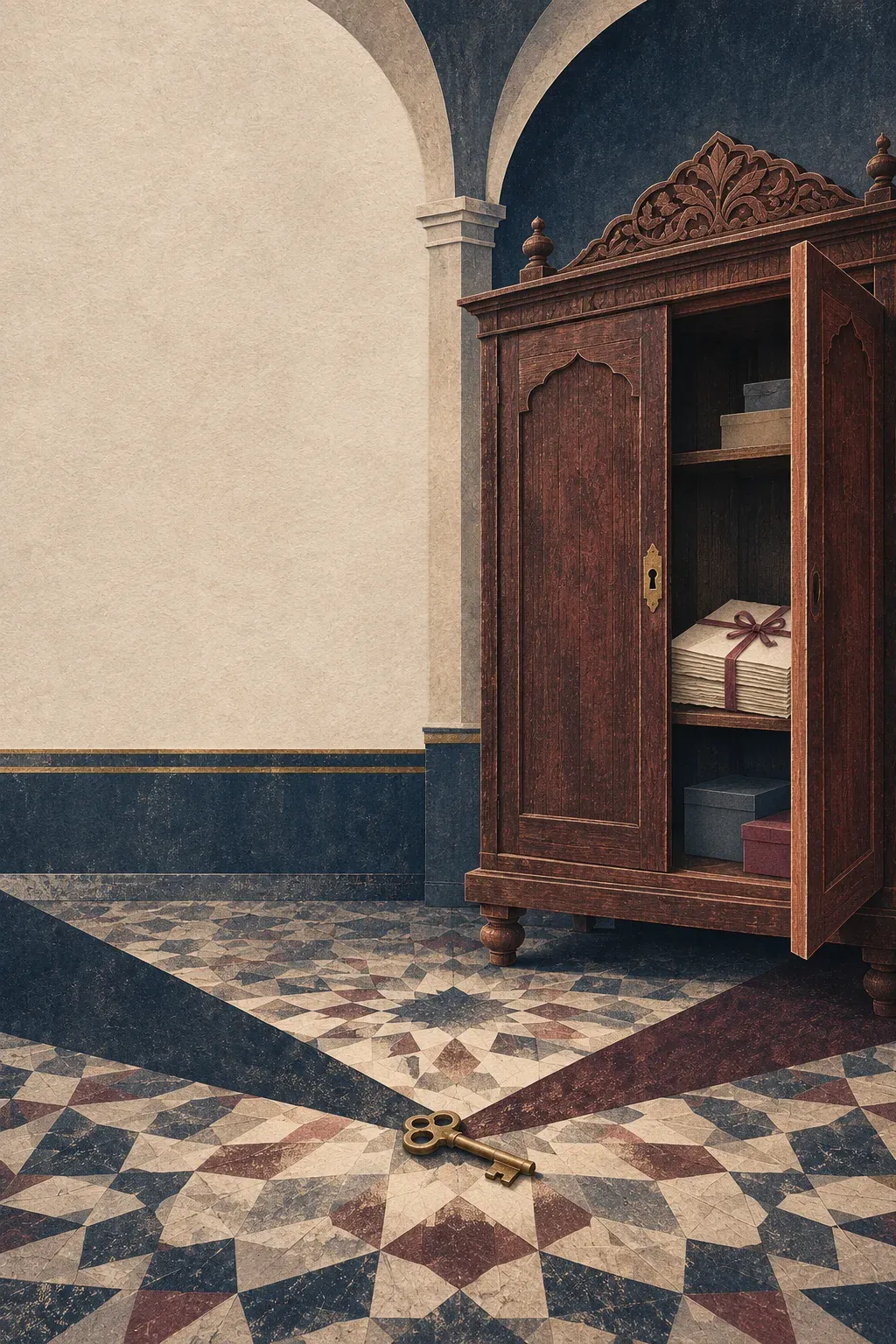
The chollisha for Abba, forty days after his death, at the old house in Wari. The milad is over, the biryani packets have gone to the mosque, and the four siblings are sitting in the drawing room under Abba’s photograph. Selim, 52, the eldest, a bank officer, has the papers for the flat in a plastic folder on his knees. Nobody has said the word property yet. Everybody is thinking it.
Then his younger brother says, “Bhaiya, you were here all these years, so of course you know what Abba wanted.” And his sister says, “Some of us were looking after him while others were in Dubai.” And the youngest, trying to help, says, “At least can we agree who gets Abba’s radio?” For a second everyone almost laughs. Then the shouting starts.
That was four months ago. The family WhatsApp group is silent except for forwarded Friday greetings. Selim has not slept properly since. He goes to Abba’s room at night and sits by the almirah. He thinks he is angry about the flat. His wife thinks he has not cried once since the funeral.
An illustration drawn from common experience. The person is invented; the pattern is not.
Understanding family conflict after a parent’s death
Disputes over property after a death can be bitter, and they are rarely only about property. Old hurts between siblings, questions of who cared for the parent, and the loss of the person who held the family together all come to the surface at once. Conflict can also interrupt grieving: anger is easier to feel than loss, and the gatherings that usually comfort a bereaved family become battlegrounds. In ICD-11, prolonged grief disorder describes intense, persistent longing or preoccupation with the person who died, with marked distress, lasting well beyond what is usual. Depression, anxiety and sleep problems can also follow.
How common it is
This research measures grief, not family disputes. In a meta-analysis of 14 studies of adults bereaved by a natural, non-violent death, about 1 in 10 (9.8%) met criteria for prolonged grief disorder; prevalence was higher in older samples. The studies come from outside Bangladesh, and the authors advise caution because of differences between them.
Signs worth noticing
- Months later, still unable to sleep, eat or concentrate
- Anger at siblings that fills most of the day
- Avoiding the parent’s room, or being unable to leave it
- No tears at all, or tears that will not stop
- Drinking, or thinking life has no point without the parent
How care helps
A psychiatrist distinguishes ordinary grief from prolonged grief disorder or depression, and checks sleep, physical health and safety. Grief-focused psychotherapy helps. A meta-analysis of 31 randomised trials found that psychological interventions reduced grief symptoms, with larger effects when delivered one to one and for people six months or more after the loss with high levels of distress. Separately from therapy, a neutral mediator, an elder the family trusts, or a lawyer can take the practical dispute out of the living room, so that grief has room to be felt. Family sessions are possible when siblings are willing.
What getting better can look like
For Selim, it might be one evening when he finally cries in Abba’s room, a lawyer’s meeting where nobody shouts, a phone call to his sister that starts with their father’s old jokes, and the radio on his desk, playing the news the way Abba liked it.
Common questions about family conflict after a parent’s death
Why do families fight after a parent dies?
Property disputes after a death often carry grief, old resentments and questions of fairness, not only money. The parent who kept the peace is gone, and everyone is in pain at the same time. Separating the practical decisions from the emotional ones can help.
What is prolonged grief disorder?
Prolonged grief disorder is a condition in ICD-11 in which intense longing for or preoccupation with the person who died lasts well beyond what is usual, with marked distress or difficulty functioning. In a meta-analysis, about 1 in 10 adults bereaved by a natural death met criteria for it. Grief-focused therapy can help.
When to see a psychiatrist
If grief or family conflict has left you unable to sleep, work or think of anything else for months, please seek help. If you feel life is not worth living, call 999 or seek help today.
Care here is personal: built around your history, your health and what you want to change, and reviewed with you as it goes.
If some of this sounds familiar, a first conversation is a good place to start. You do not need the right words, or to be certain.
Dr. Tajreen is consulting in Uttar Badda now, until 8:00 pm. Call +880 1847-331010Every address and its hours
Sources
- Lundorff et al., Journal of Affective Disorders, 2017 (PMID 28167398)
- Johannsen et al., Journal of Affective Disorders, 2019 (PMID 31029856)
You do not need to have everything figured out before you begin.